

What’s the point in learning? I’ve been teaching about art since college, when I was a docent. In each phase of my career as an educator, I have confronted the perennial question of education's role in society. As we see more and more high-profile figures advocating the use of AI to increase productivity, and a growing number suggesting that the role of education is workforce training, it is incumbent on every person with a brain on this planet to decide what the role of learning is.
Thought is human. From the earliest moments when a baby’s eyes can barely focus, they are cogitating. What those ideas are will be lost as they grow up, but those early moments are likely as impactful as any other moments during their first years.
A portion of our earliest lessons are not structured formally but necessary for survival. We might learn not to touch a stove after a painful early brush with heat, or thanks to an adult's intervention. Other unstructured lessons are taught through modeling. Eating with others, sitting in chairs, and taking turns are often things people learn in social settings. We learn to be in community through community.
Our civilization, however, is an incredibly stratified society in which survival requires people to perform certain tasks, i.e., to work. Work is such a part of our society that it is naturalized. It’s hard to fathom how we might function if work wasn’t a requirement for eating. But prehistoric people did not have wage labor, yet they survived and thrived. We have artworks, shoes, and burials. People produce things without the inducement of wages.
Another challenge about work in our current society is that some professions are classified as skilled labor while others are not. Similarly, some jobs are perceived as creative industries while others are not. Additionally, wages are assessed by the value shareholders can garner from your efforts, not by how valuable your skills are to society. In other words, we are living in a cockamamie system in which utility, creativity, and thought are not in any way connected to how much money you make.
The futility of our system is insanely frustrating for the American worker. But the problem has been exacerbated by a tax and wage structure that has stagnated since the Reagan administration. Working hard no longer allows the American worker to support themselves easily.
The broken American dream is not being fixed by politicians. The same elected officials are increasingly suggesting that higher education is a waste of money. These politicians, however, are sending their children to university. Why are so many high-powered officials so thoroughly anti-intellectual?
One of the challenges in our society is that men have fallen behind women in educational settings. The anti-higher education rhetoric has increased considerably among right-wing white men, the same people who are losing in the educational field. Men do not want to be emasculated by women's successes.
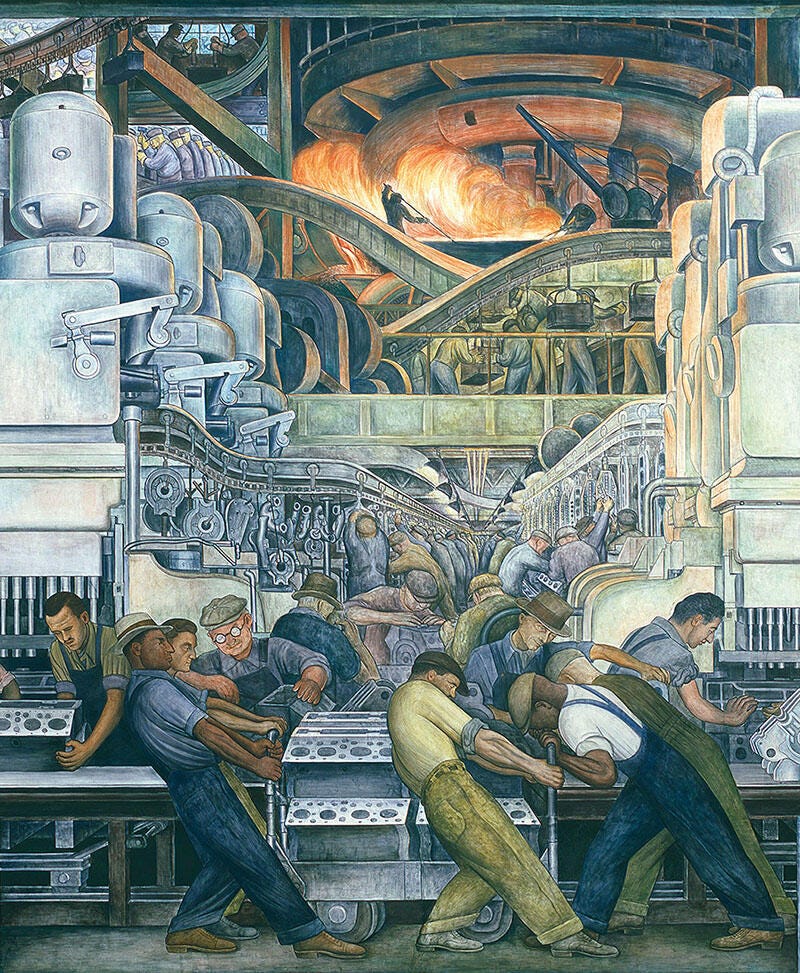
But the other challenge society has is jobs. During the Industrial Revolution, there were enough jobs for unskilled workers, as they were called laborers. I’d encourage anybody to try manual labor to see that skill is required. These are manual skills, but they also require a great deal of cognitive thinking, such as spatial awareness. So while the skill is not something that requires book learning, perhaps it certainly requires thought. But the big difference with many of these factory jobs is that you could be trained on-site. Much of the work in the 21st century has required training that companies are no longer willing to do. If you get hired into an AI company right now, they will not pay for you to learn how to use AI. They would rather fire you, as there are few protections in at-will states. So corporations would like to save money by forcing universities to train people for jobs.
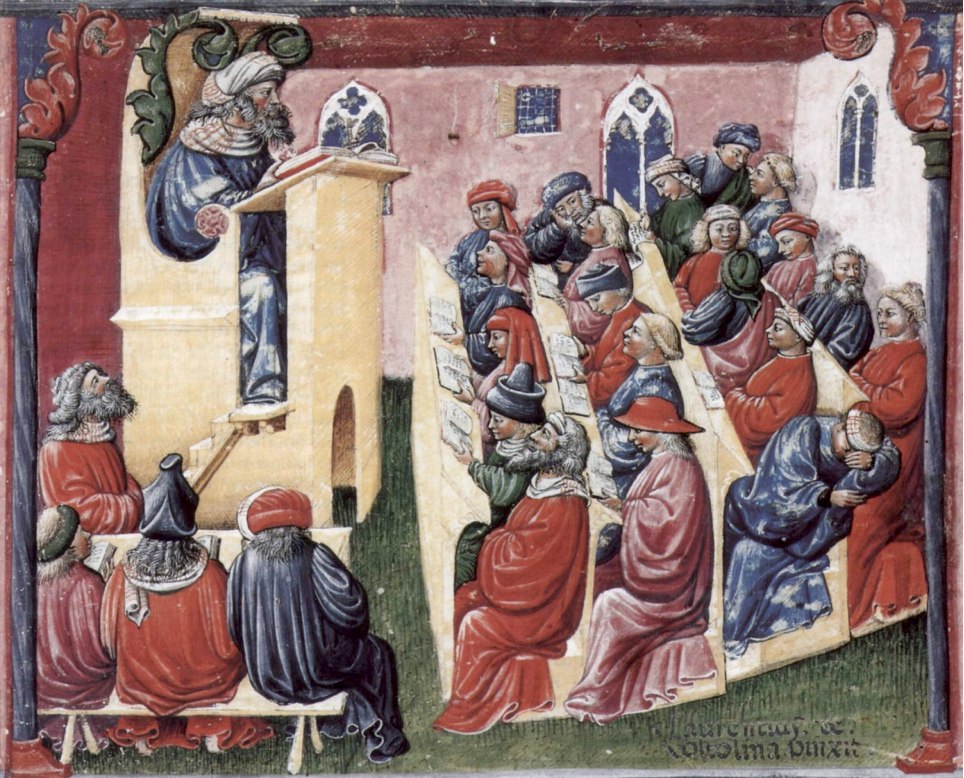
You might think that universities are meant to train you for a job, but that is largely not true for the history of learning. Universities began in Europe in the Middle Ages. They have a considerably longer history in Asia and the Middle East. While certain professions had training for those roles, specifically medicine, law, and the church, the goal of the university was to create thinkers, not workers.
Well into the 20th century, universities were largely meant to help people maintain their ability to think and continue to learn after they left school. Key skills were research, writing, and verbal communication. Your degree would make you a better engineer or political scientist. But the job training to go from a university to a functional corporation fell on the corporation.
In other words, the push to move to a completely job-focused higher education degree is allowing companies to avoid training while cheating our young people out of the opportunity to learn to think. For many very wealthy people, the idea of a populace that is trained to be functionaries rather than thinking adults is ideal. Smart people start revolts.
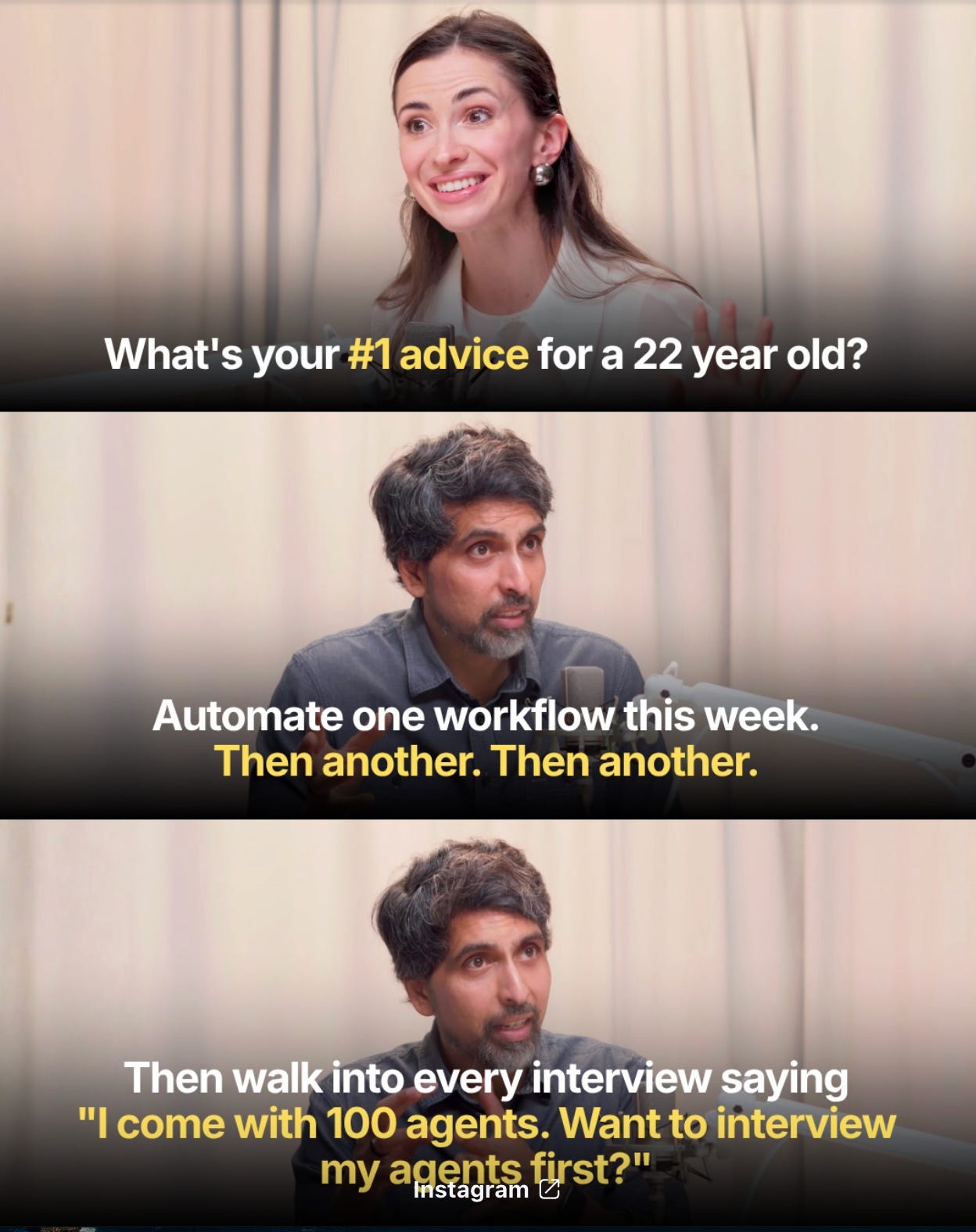
Many advocates of a thought-free education for young people are only looking at short-term gains. For example, Sal Khan has been hyping the idea of skipping university for AI. He thinks kids could train agents to automate work.
Khan himself went his own way, using thought and intelligence. Khan Academy is an educational organization that began when he realized he could help his cousin learn math. From these personal beginnings, Khan eventually created one of the largest and most useful tools to support K-12 students in learning a variety of subjects. For somebody whose whole business is teaching, to suggest that instead of learning, you should create machines that will work for you, basically like a digital serf master (lord), is particularly rich, pun intended. He made his money by teaching. Now he wants the next generation to be masters of the digital serfs, in the world where he is already rich and fulfilled. He enjoyed an idea coming to fruition to earn him money, but future generations will not need to have ideas. They’ll just be drones.
But he’s living in the psychosis of a closed tech world, where they validate each other. Interestingly enough, their hermeneutic circle of ‘AI is better than people’ existence is replicating how the AI machine works. Machine learning has long been discussed as a tool for harnessing big data. Basically, imagine if all data on a single topic, once vetted, could be aggregated; you’d have greater certainty with your data. Once vetted is the key element in that system. Any person who has been through middle school understands that systems of knowledge based on poorly vetted information, once aggregated, result in the lowest possible certainty. Bad information gets worse when combined.
The playground also helps us understand why AI psychosis is so tempting. Private girls’ school is a great way to see how words can transform vibes. Having been in that hotbed of meanness in my youth, we learn to use words to wound where other playgrounds might handle dissent with a slap. No wounds to be seen, but plenty to be felt. One of the classics of girls' school is to hype up the It girl. The popular girl isn’t the smartest or the prettiest, but she’s the one who has aggregated hype. AI is the hype man for the user.

My belief is that tech is run by people who never healed the wounds of feeling uncool; AI is the ideal buddy for people who want to feel cool. These are also people who often eschewed traditional work to start their own path. They’ve missed many of the social skills the rest of us learned in traditional university systems and workplaces. Then they get a machine that lies to them, and they believe. Broken people aren’t healed easily, and certainly not by yes-men or machines.
What we’re seeing is people who only learned enough to become rich and largely didn’t learn anything about themselves, and who are passionate about something that lies to them. That the AI wave is largely run by men is not surprising. It helps them outrun self-knowledge and therapy, but also affords them the same easy path to success they’ve grown to expect. Pardon my language, but it’s basically a deluded circle-jerk of lame bros using machines because humans wouldn’t touch their foolishness.
Which takes me back to the idea of learning. Learning is a complex concept that touches on both the self and the world of ideas. Often people confuse the two parts of becoming a thoughtful person. Having taught art history for many years, I often hear people remark that I’m learned. And what I usually say to them is, no, I know a lot of facts. But I’ve also taught myself how to learn. In education, there are two elements that everyone needs to grapple with. The first is the idea of facts. Some of us dive very deeply into a subject, so all of the facts we ascertain are connected to the same topic. Others have a broad base of knowledge, gaining facts across a huge spectrum of ideas. There are strengths in both ways of thinking. But neither is useful unless you have the baseline frameworks and intellectual scaffolding to understand those facts.
For example, the ‘I do my own research’ people are employing a sort of hunt-and-peck form of learning; they look for something that supports what they’ve already decided. In this, they are both demonstrating bias and poor research skills. But underlying these problems is a bigger issue. They cannot learn. They start from fear and refuse to handle any cognitive dissonance that they would face through learning.
So, how do you do better? This goes back to being an open learner because thought is human, but learning is social. We live in a socially constructed society; therefore, making sense of our world requires working with others to understand the complex nature of every part of existence.
Learning is about getting closer to knowing who you are, what the world might be, and where we are in society today. Learning is about enjoying the life of the mind. Learning is about experiencing ideas you can’t even fathom right now. Learning is seeing the world anew each day. Learning is everything that feels hard and everything that’s worth trying harder for. Learning is why we are here together in this society every day, all the time. Learning is one of the best things about being a human.
Each of us as people should revel in the idea that we are lifelong learners. We have the gift of thought and the ability to learn. To cede this amazing ability to fear is a crime.
“The broken American dream is not being fixed by politicians. The same elected officials are increasingly suggesting that higher education is a waste of money.” I think it was under Reagan/Nixon that the GOP started targeting college campuses; an educated electorate makes for one that is hard to manipulate. One of the tools was to under fund and/or price it out of reach.
This was a lovely 7 course meal. The chef is certain of the recipe, there are several popular assumptions, some of the seasoning tastes a little off, but it's largely a matter of perception. It's not like Mama used to whip up, but times have changed. Maybe coconut oil over canola? No. the recipe calls for canola. Coconut oil is for massages. It's not polite to pick at your food. We politely give props. Everyone else seems satisfied.