
The Definitive Guide to Visiting Museums

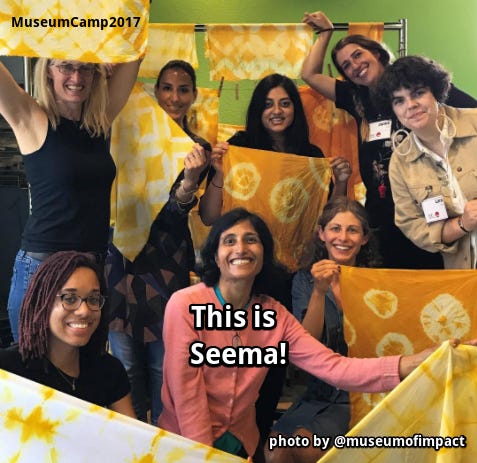
I worked in museums for more than 20 years. As a seasoned professional, I can tell you with almost absolute certainty that there is no definitive guide, universal method, or singular way to enjoy museums.
Museum staff often see their most important role as a research and preservation tool for society. For the public, museums are places to look at things. This gap between public expectations and the museum’s desires often makes the spaces hard to enjoy.
This post is to help everyone, from the well-heeled museum visitor to the person who has never visited a museum, find useful ways to improve their museum visit. Overall, I hope you learn to find your ideal museum experience.
The Lay of the Land
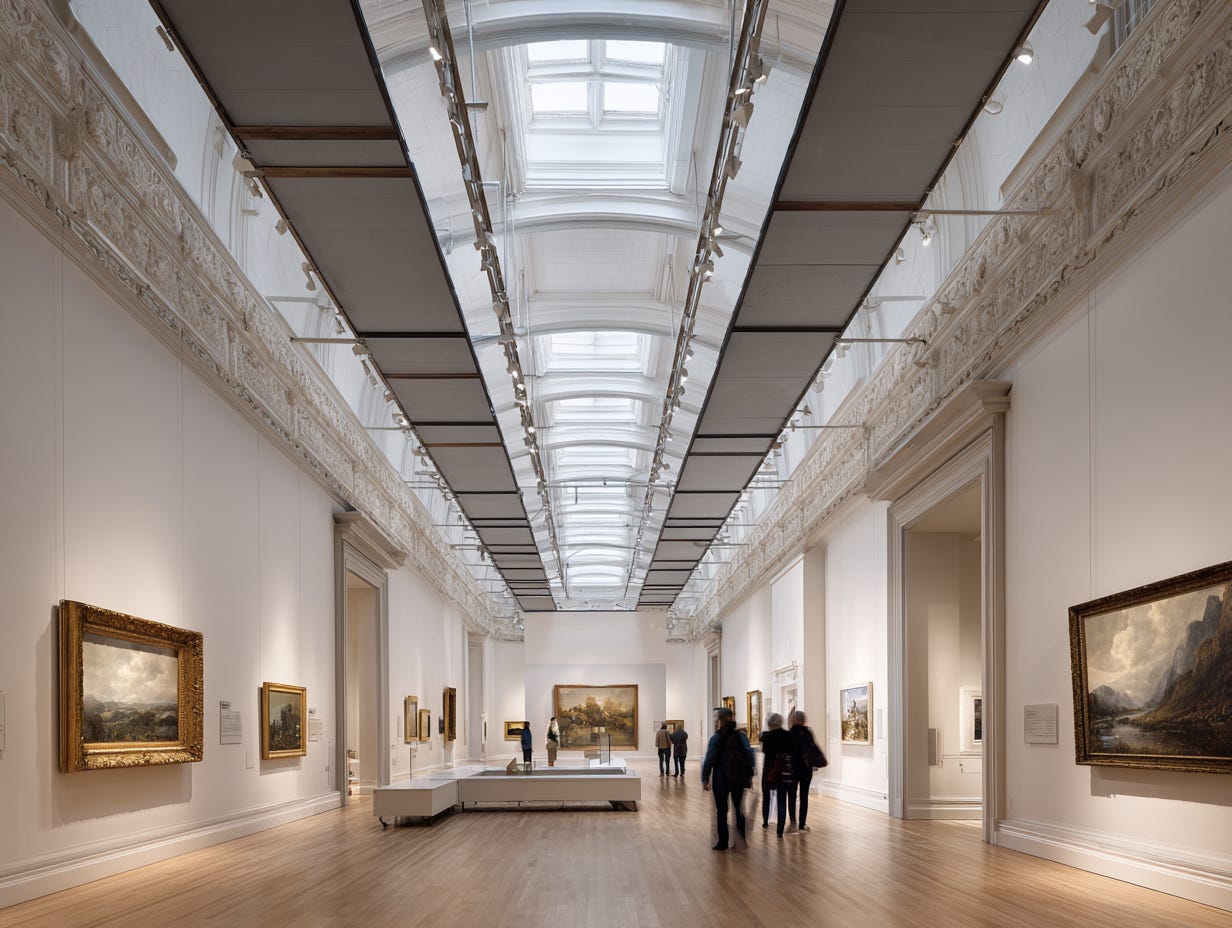
Every sign, every map, the location of every object, frankly, every element of a museum has been vetted by teams and teams of people. There are untold hours behind every title, every color on a map, every wall color. People from many different academic backgrounds come together to make an installation. Many choose to fight tooth and nail for their convictions. The mudslingers, mission-driven workers, and egomaniacs usually balance each other to create the spaces you visit.
Despite all the effort that goes into museum spaces, most people who work in museums do not come from the leisure sector. Any lessons that casinos, amusement parks, grocery stores, or clothing boutiques have learned about making visitors feel comfortable are lost on museum pros. Therefore, most visitors are a bit discombobulated in museum galleries. If you walk into a museum and everything seems like it’s in the wrong place, it’s actually because museums are out of step with most of the places you go in your regular life.
For example, in a grocery store, milk is usually at the back. Their goal is to get you to spend more money. On the way to the milk, ideally, you buy a few other items you see on your way. Many museums use the same mentality, placing the most important artwork farthest from the door. However, visitors don’t realize they need to see it. They use the same mechanism, but the visitors don’t share the same desire. Visitors rarely need to see an object the way they need milk for coffee. Museums, therefore, end up accidentally hiding some of the good stuff, because people aren’t motivated by galleries the way they are at stores.

Therefore, if there is a baffle wall or a freestanding wall, peek around to see what’s on the other side; that is often the special artwork they hope you will see. Often, the curator has placed the piece de resistance behind the wall. I worked in a museum where the curator wanted Van Gogh's behind the baffle wall to heighten the excitement. Our exit research showed most people just missed those works.
Rooms are Supposed to Tell Stories
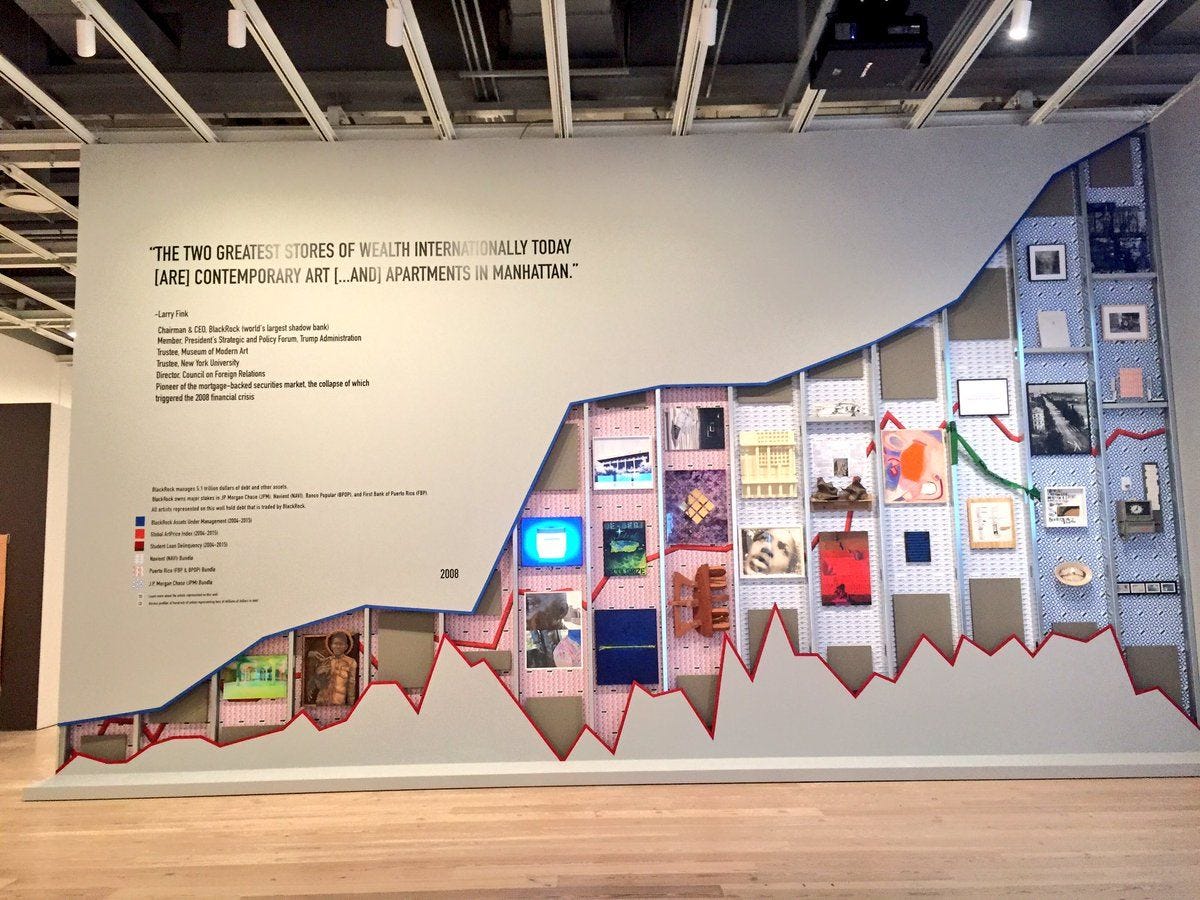
Every room in a museum is meant to have a point of view. That central idea is usually articulated in multiple ways when you walk into the space. To the side of the door, there is usually a panel with text. This introductory panel will give you the highlights of the room. However, studies show most people don’t read it. But if you’re the kind of person who feels uncomfortable in museum space or likes to be prepared, the kind of person who looks up the menu before you go to a restaurant, definitely read it.
Having written and edited scores of introductory panels for museums, galleries, and exhibitions, I wouldn’t say they’re necessarily helpful to read. They offer the organizing vision for the room. This is like reading the director’s vision before watching a movie. The information will impact your understanding of the movie. Similarly, reading the panel will impact your opinion on the art.
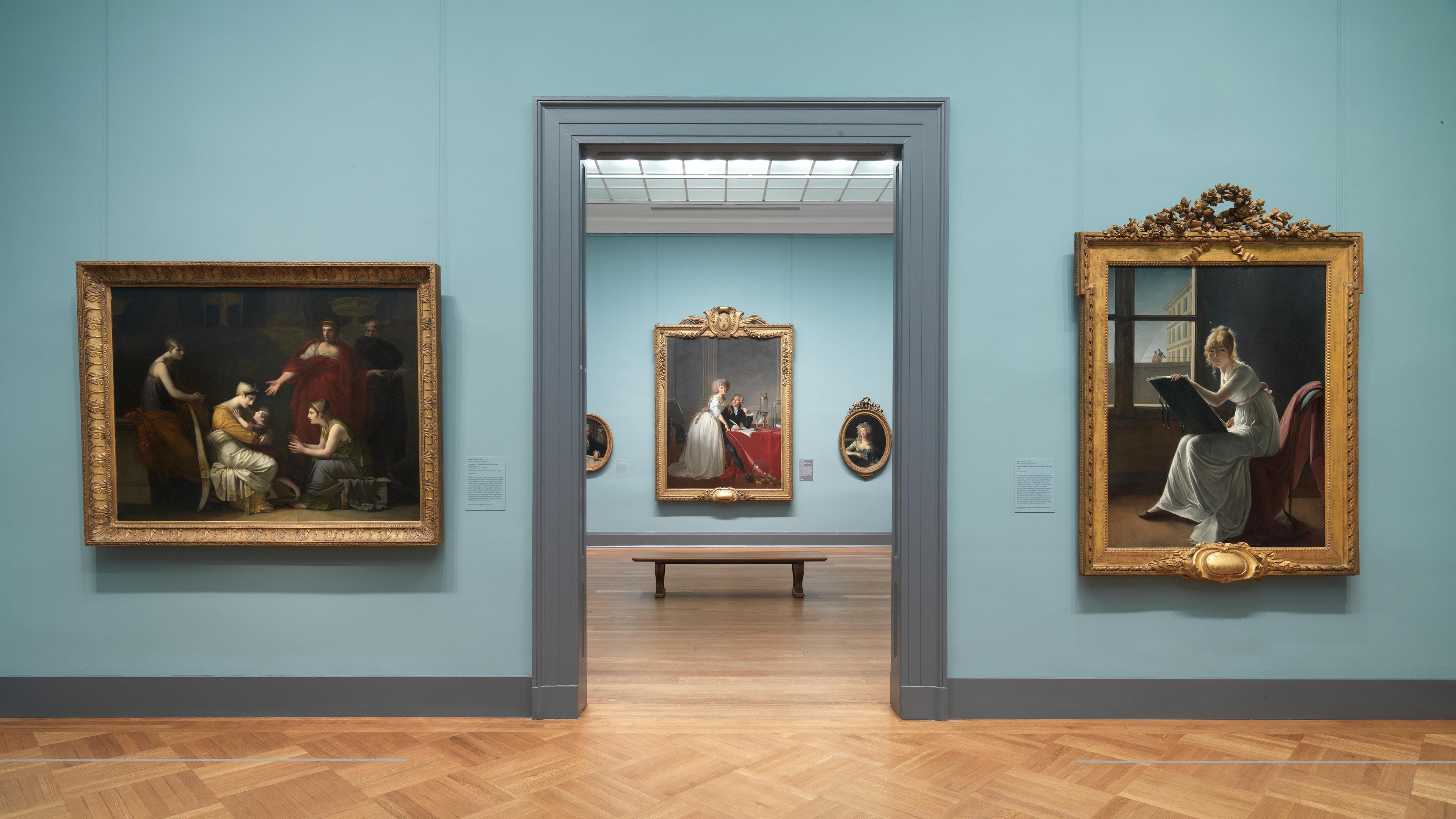
Ideally, each label explains the artwork and helps you understand why it is in this space. So if a room has a variety of still lifes, the label should say, "such-and-such artist made this, and this is an important still life because… That said, as a viewer, you should be able to enjoy that artwork independent of the reason that an object is in that room.
The most useful thing you can do when you walk into a gallery is try to decide what is most interesting for you to look at. Do not feel like you have to go in the order they suggest.
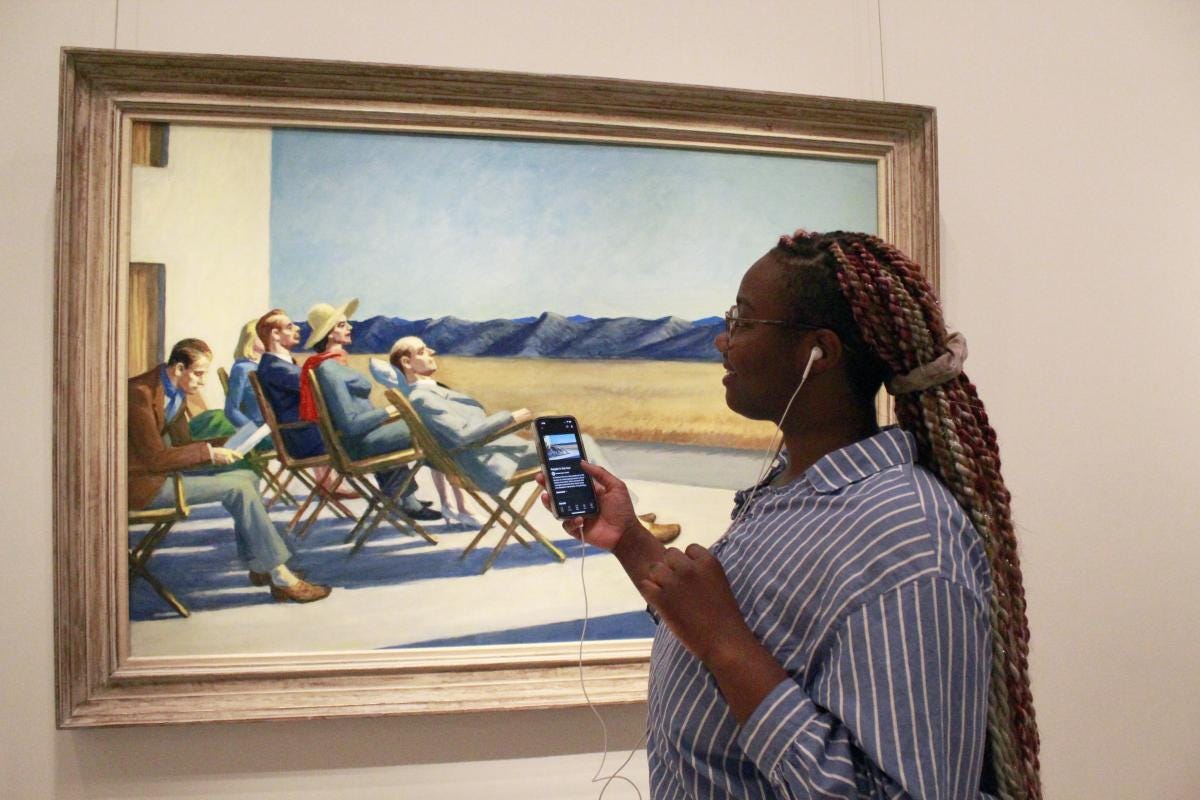
Museums have two different kinds of exhibit spaces. Temporary exhibits have a theme, while most exhibition galleries have a very specific order. This is less about the curatorial vision than about ticketing. By ensuring there’s an order, they can count how many people will go through that space and then sell the right number of tickets. Even in those spaces, you don’t feel like you have to go in the order that the audio tour has, and in fact, if you go out of order in a pay exhibition, as long as the guards don’t get upset, you will probably have a better experience because you will not be stuck with all the other people.
Museum permanent galleries are meant to have no sequence, meaning you could visit three galleries; each room will have a theme, but the themes are not contingent on each other. That way, visitors can make their own path. That is why I say just look for things that are interesting. Enjoy those works. Read those labels, if you choose. Then, if the work is truly interesting, read the panel. You will find your favorite things more easily if you let your curiosity lead. Think of museums as choose-your-own-adventure. Tell your own story about the collection, rather than only seeing the works from the point of view of the curator.
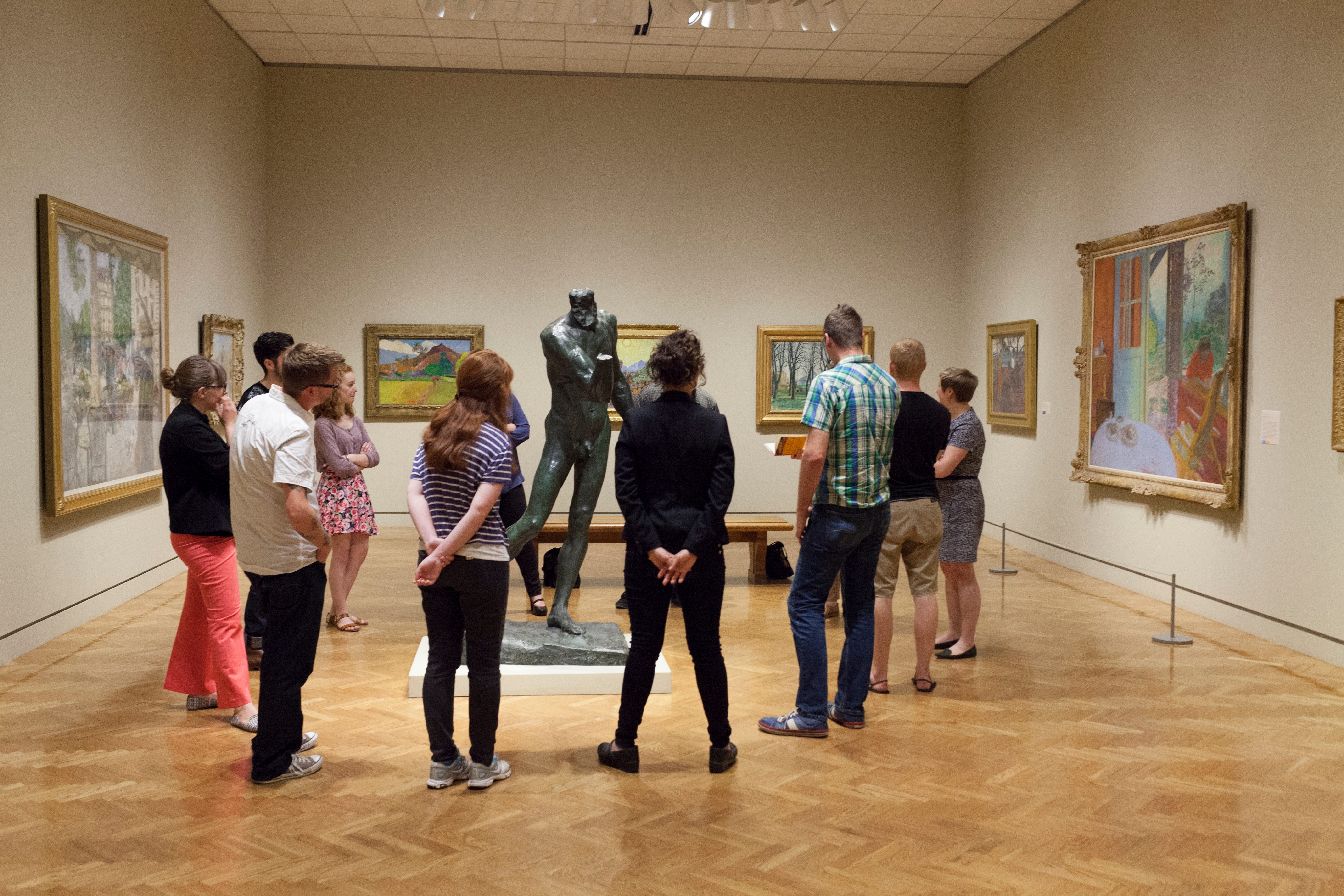
Museums are All about Relationships
Curatorial work is ideally about researching artworks and then showcasing those ideas in ways that help visitors understand the art more thoroughly. Much of the installation's physical space is designed to support viewing of the art. For example, wall colors are often chosen to evoke the historical period in which the art was made. Wall colors might also be chosen because they resonate with the artwork and help you understand it differently. Contemporary art is often shown against a white wall because the artist intended it to be.
But the background color vastly impacts your appreciation of the work. If you see your face when you’re wearing a one-color dress, and then you look at it while wearing a different color dress, you might notice your face looks slightly different. The interactions between colors can transform the appearance of every item, from your face to that artwork. Therefore, if you have an opportunity to see an artwork in a different kind of installation, say your favorite Frida Kahlo in a special exhibition at the Victoria and Albert Museum, jump at that chance because that curator will make a different choice.
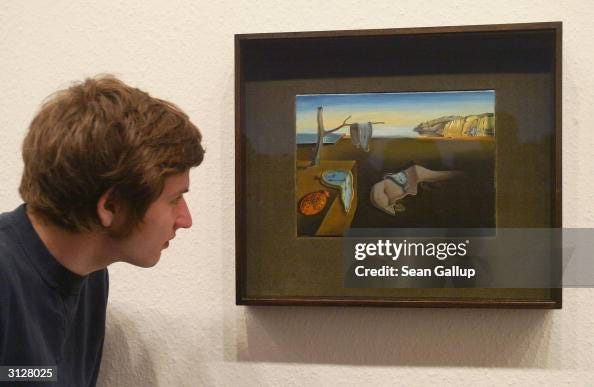
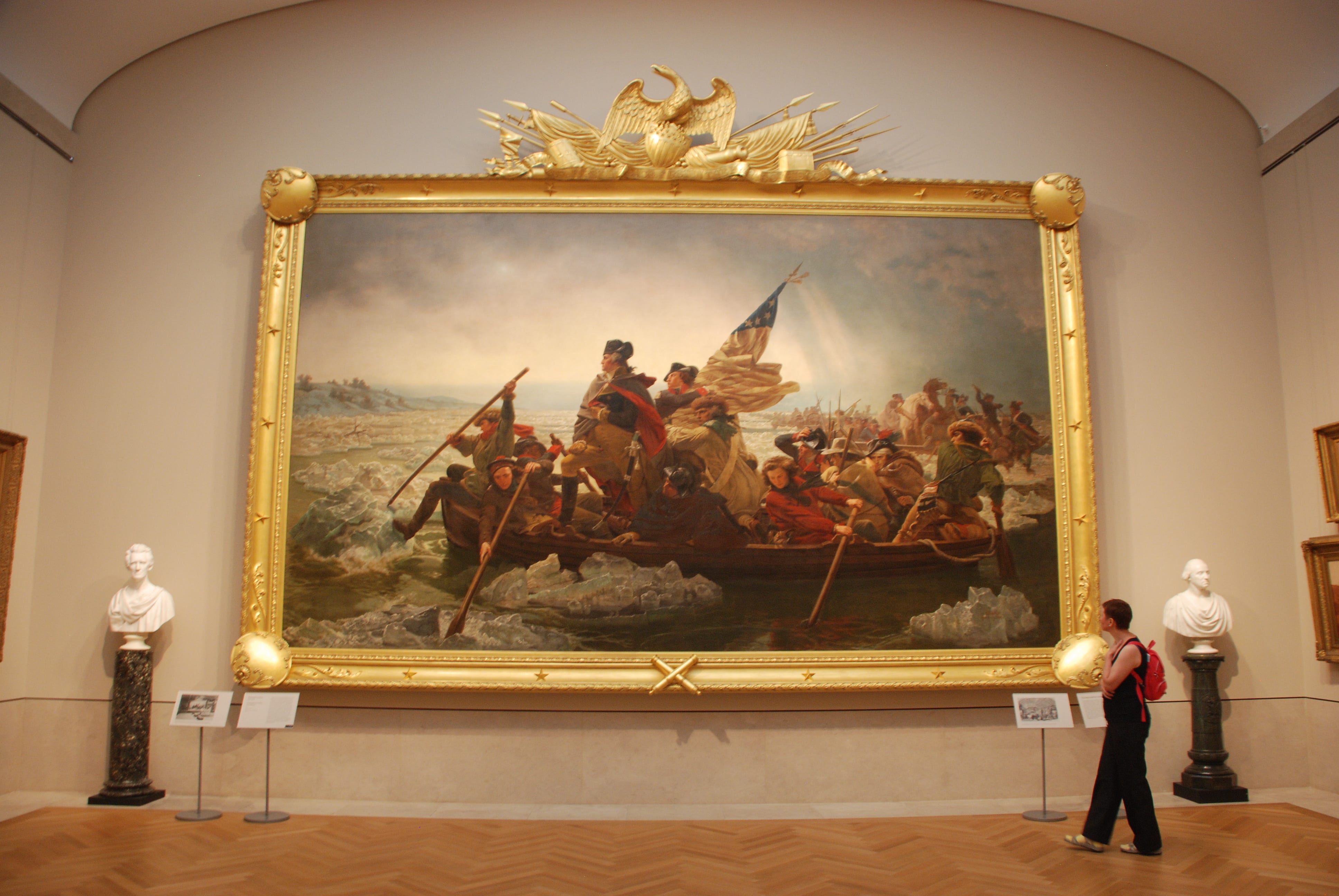
Another relational issue that arises in galleries is that works are placed beside something, which is where scale is really important. There are many works, like Dali’s Persistence of Memory, that are much smaller than you might imagine if you’ve only ever seen it digitally. Similarly, there are works such as Washington Crossing the Delaware that are quite large. Those kinds of scale differences are hard to grasp digitally, but in a gallery, they become even more evident when they’re set next to something else.
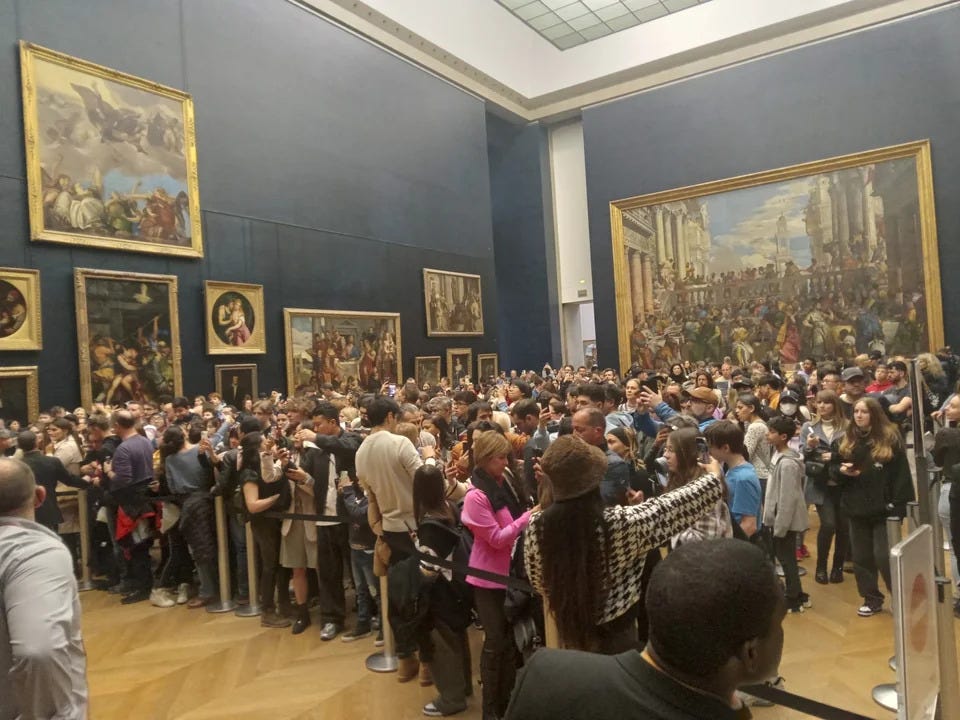
The classic example of this is that the Mona Lisa is in the room with the largest painting, the Marriage at Cana. The Mona Lisa is a fairly small painting. Its scale is even more obvious when seen beside much larger paintings. If it were a room by itself, the room would be scaled to match. Its small size means that the disparity would be less obvious.
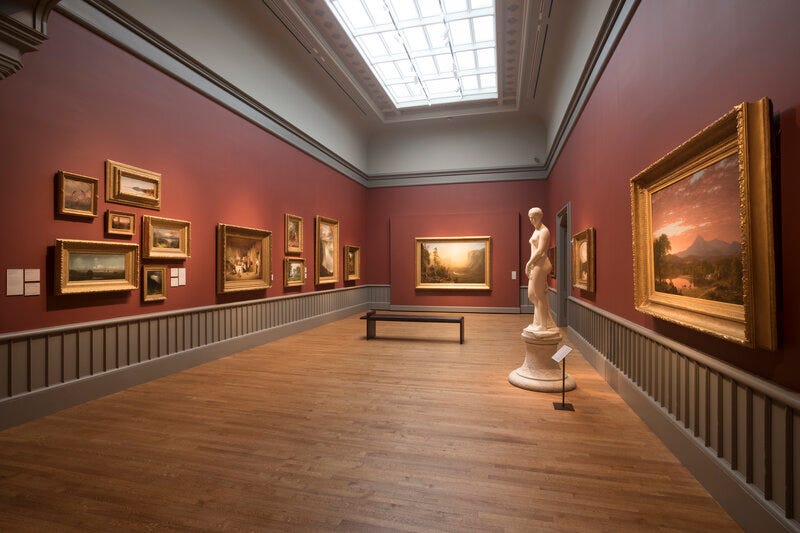
Finally, relationships and galleries often help you better understand the elements of an artwork. For example, you’re in a gallery with many American landscapes on display. Comparison helps grow understanding. How do the brushstrokes compare? If they’re different, how does it change how you feel? So many of the questions that help you understand art are the simplest, the ones we used as children to make sense of the world. Why? Because many of us do not have much experience with art. It is OK to ask ourselves elemental questions so we can reach the basic understandings we need to love art.
Education isn’t Just about Reading
Having paid an entrance fee, I understand you want to get your worth out of a museum visit. So this advice is for when you get to go on the free day. Museums often privilege textual learning, despite being spaces for visual literacy. This is because most of the people who work at the museum are textual learners. Curators, by and large, are not practicing artists, but instead writers who share knowledge about art. Most of the information people share has a strong textual component, like labels, informational guides, gallery teachers’ talks, and public lectures. In our text-based society, this means you’re getting the same kind of input that you have everywhere else in your day. If you can allow yourself to just look, wander around, and enjoy what you’re seeing, or be completely turned off to text, you will find true relaxation. That’s very hard in our society. While all that information is available to you, museums are intentionally designed to provide an entirely visual experience. If you can sit on the bench and just zone out, looking at the art, it can be an incredibly relaxing and centering part of your day.
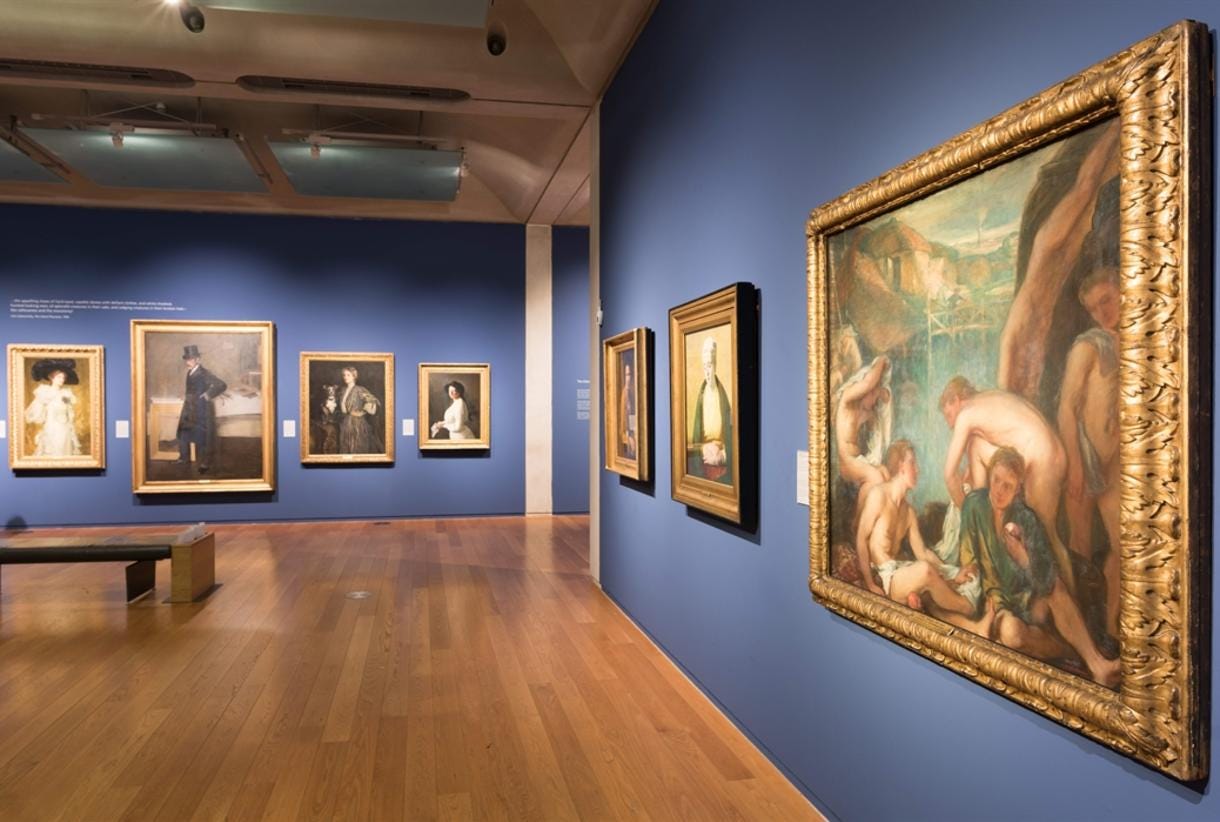
This type of visual first moment is also incredibly helpful in training your eye. Sometimes curators use the phrase connoisseurship, which is somewhat outdated, to imply that you had a very good eye for understanding objects. For example, you could walk into an antique shop and, amongst all of the bric-a-brac, you would pick out the one that was the most valuable. People like that are not born, they are made. Spending a lot of time looking helps you understand what quality looks like. And when I say quality, I don’t mean a specific artist's historical quality; what I mean is what you see as important.
As someone trained as an art historian, I had to relearn how to look when I left the field. Many of the works that I show on my social media channels, as well as on my Substack notes field, would not qualify as fine art for a world-class art museum. After I left the field, I spent a long time studying tattoo artists, graphic designers, and food artists to develop my taste. There was no text that would lead me to understand what I found interesting. I just had to put in the time and understand what interested me. For the latter, that meant pushing myself to spend time looking at things that turned me off at first glance. Appreciating visual culture is a bit like developing your palate. They say it takes 12 tastes before you like a food in terms of visual art. It often takes much more than that, because many artists produce work not meant to be beautiful but to challenge you. To understand the value of those works, you might need to get past how ugly they might be, because not all art is about beauty.
Museums are Right
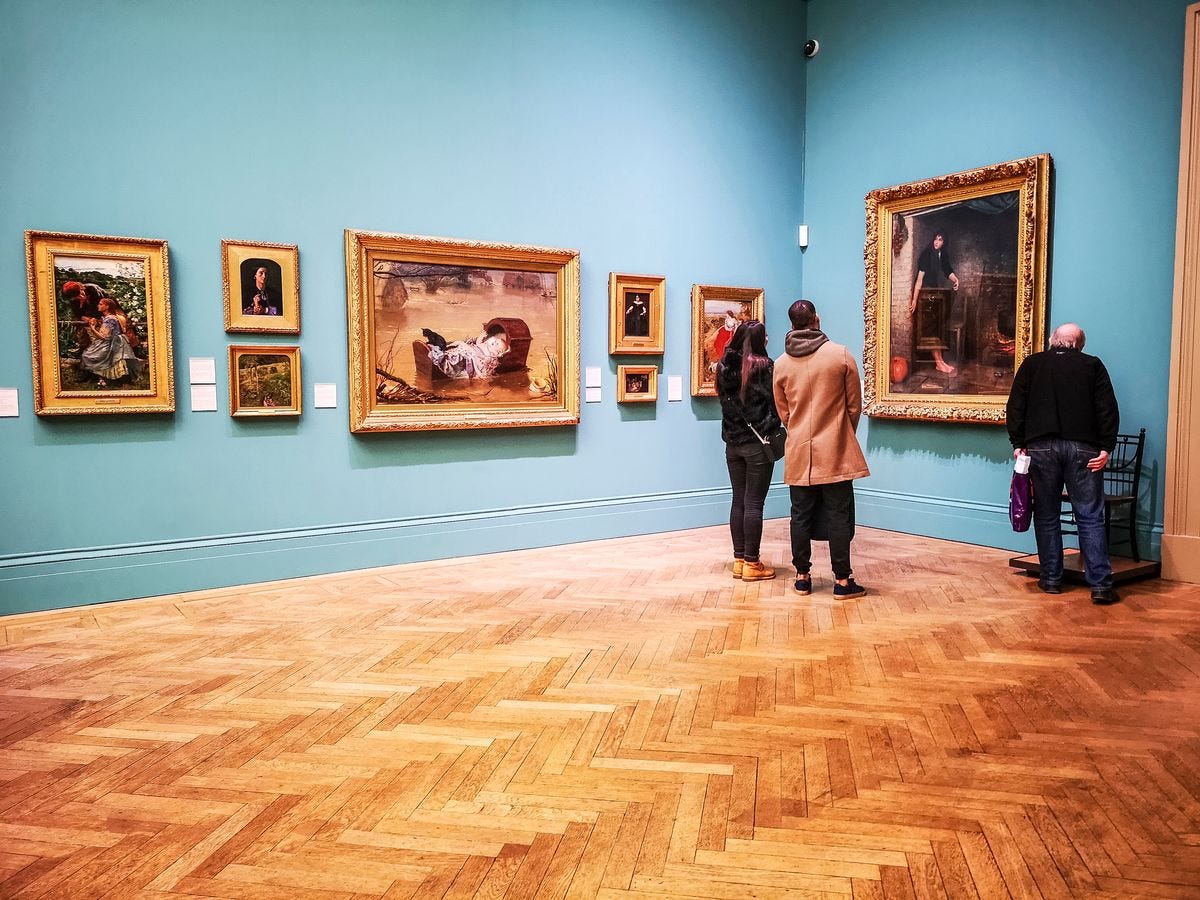
First and foremost, many museum galleries are planned for right-handed people. You might think this doesn't matter, but if you look in the galleries and you’re looking for a label, it’s most often on the right side of an artwork. Now, in a gallery, you might not have an emergency where you have to read the label, but if you are looking for a restroom or a map, look up at the walls and look up at the right of doorways.
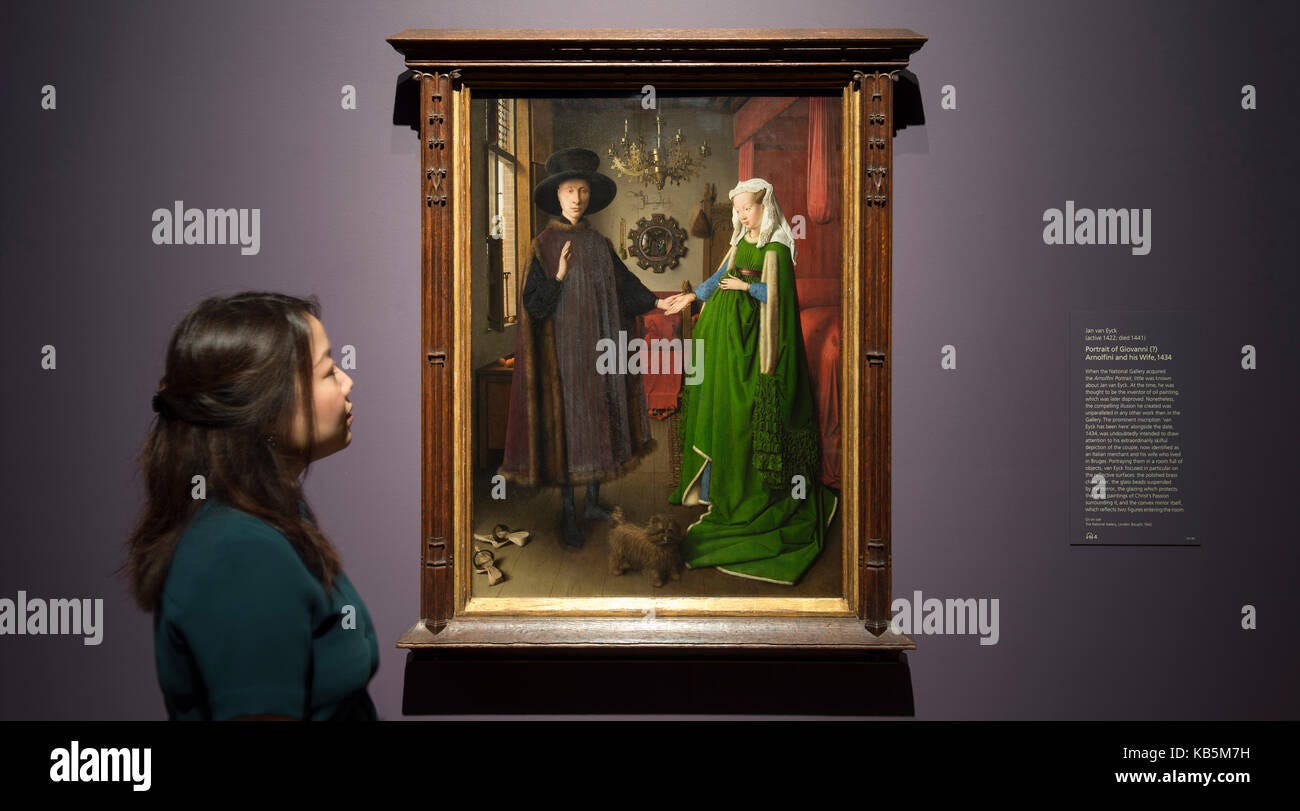
Museums usually put the right information in their permanent galleries. They do not present speculative information; for example, the Internet loves the theory that the van Eyck portrait is of his dead wife. The museum label, which is also available online, notes that this is his second wife, who was very much alive when this painting was made. Now, posthumous portraits have existed since the Renaissance. They were often of women who died in childbirth, showing her with her children. But, having read the article from which that belief that she is the first wife came, I can see why the museum did not update its permanent collection label. It’s a speculative reading of that painting, not based on solid evidence like the first wife’s appearance or a contract, but the idea that posthumous portraits exist. On the Internet, things that feel surprising or like a secret the museum is holding back from you are often given disproportionate weight. It’s the same reason the conspiracy theories do so well on the Internet. However, museums see themselves as trustworthy sources of the most accurate information, so they don’t display every theory on the label. They publish the most accepted theory. These theories are accepted when more scholars examine that information and validate the original theorist's work. Given how long ago that article was written, it seems it may no longer be valid. Notice how many words I just used to explain the situation? You can see why it wouldn’t be in the label.
Which takes me to another reason museums are right. Museums try to right-size their labels so they’re never bigger than the art. Museums understand that visitors can become overloaded with too much information, and, as such, they work hard to scale back the information on the walls. In addition, museums understand that visitors can become overloaded with too much information, and as such, they work hard to right information on the walls.
This was the part of the museum work that I spent the most time on. You have no idea how much grown adults can fight about the 70 words on a label. There are often competing interests. Curators often want the labels to show them as academic. People working in interpretation, that is, the role of the educator who helps ensure that museum exhibitions and galleries are broadly understandable (and the role I held), want labels that don’t confuse visitors. Sometimes, funders impact how labels are written. For example, many Belgian private collectors have stipulations in their loan agreements about what can be said on the label regarding provenance, which means documenting the history of those objects. Finally, the editorial often tries to ensure labels maintain a house style. This is particularly important in large museums with multiple curators, each with their own voice. When serving all those masters, labels can sometimes be stripped of meaning and rendered neutral. The label is often the right number of characters, but not necessarily the right content you want to read about.
My suggestion is that if you have a question, ask the guard in the room. Museums vary widely in how they train guards about the collection. Additionally, some museums have security staff who are not museum professionals but rather people who love the power of guarding. But the vast majority of museum guards know a lot about art, particularly at museums associated with art schools. The other option is to photograph the label and then Google it. It is worth remembering that Google has become considerably worse. There are several incorrect sources. If you are truly looking for in-depth information, consider visiting the museum’s library as well. Many museums have libraries that are meant to serve the staff, but also field questions from the public. That information is easily available through the museum’s website.
Now, while there are all these elements that make museums seem like they are always right about everything, that is a façade. Despite all these elements in the museum space that convey importance, your personal opinion is incredibly valid. It’s OK to read a label and think something else. What the Internet has shown is that the museum does not have a monopoly on understanding art. But ideally, understanding the resources museums offer will help you choose which of those resources on art are most important to you.
Don’t Kid Yourself about Museums
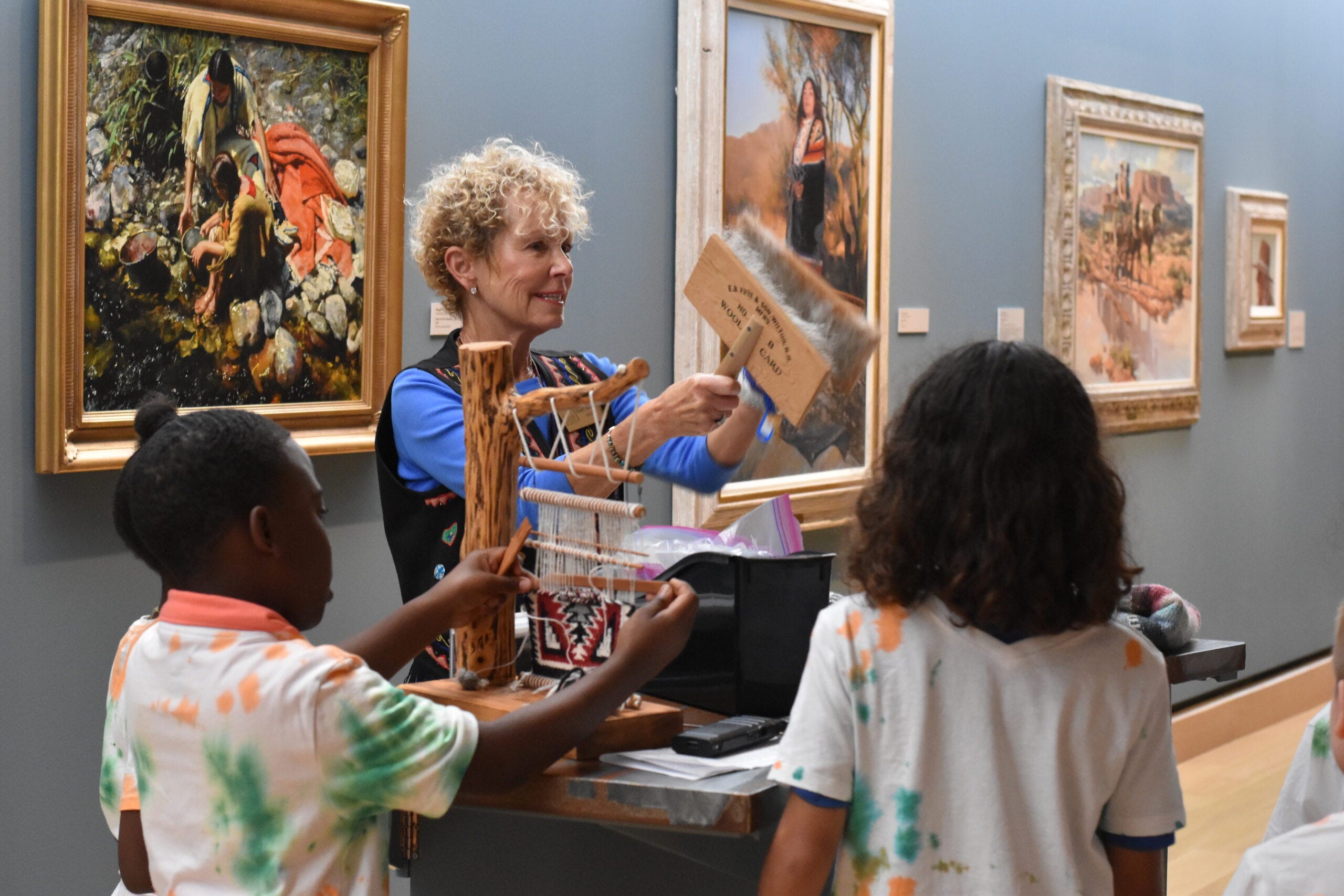
More people in the United States visit museums than sporting events, but the vast majority of those people are there under duress. Most museums receive a great deal of their funding from foundations that support school tours. K-12 education is the backbone of museum visitation. Most curators focus their energy on adult visitors, and of those, most specifically donors. So if you are not a donor or a school visitor, the museum uses fewer resources to meet your needs. There are multiple ways to get what you need from a museum if you are not super wealthy or a school student. One way is to enjoy the resources they create for schools and young people. The people writing the family guides and school materials are often better able to explain the art than the curators, because they are trained to teach. If you see a family guide, grab it. Similarly, many museums have touch carts where docents allow children to touch replicas of artworks and gallery objects. Those cards are not only for children, and most people understand that it is better when they can use their sense of touch.
If you really appreciate a museum and they are not providing the resources you want, email your membership office if you are a member. This is how many museum programs have come to fruition; for example, almost every museum now hosts a late-night event with music and drinks. I started one of those not the first of them, but one of those that almost 20 years later is still in existence. We were able to start that program because so many people were asking for it. A number of patrons mentioned they had visited other museums and cities and wanted something like this. Public opinion is really important to museum leaders, as it is a source of validation for their funding, and they often listen to the public more than they do to their staff.
And the last thing that we often kid ourselves about when we talk about museums is that they are nonprofits. The financial structure is certainly set up so they don’t have to make a profit. The very top echelons make huge amounts of money, often multiple times as much as the front-of-house staff. Directors of major museums often make $1 million a year. Most of the people you see when you walk through the museum galleries make less than a living wage, even worse, given that museums are, on paper, educational institutions.
They often pay very little for education and outsource gallery teaching to volunteers. Docents can be good, but they’re often there to validate their sense of superiority. Teaching in the galleries gives them that hit of being the smartest person in the room. My point is that I’ve seen many people online mention that the docent was rude because they were asking a question they didn’t know the answer to, which shows that the docent isn’t always right, but that they want to feel right. My suggestion for the general audiences that go through galleries is to start with a docent tour, but if the docent is annoying, walk away. You do not owe them any of your time, and most likely, they are doing this for the cachet that volunteering at that institution gives them.
I strongly value museums, and I hope that everybody can develop an appreciation for the resource that authentic objects provide to our communities. That said, everybody who works in the museum is fallible and human, and often has a huge ego. If you're the general audience member, you shouldn’t have to put up with that. Spend your time enjoying yourself, experience what feels interesting to you, and walk away from what doesn’t.
Your Definitive Guide
Overall, find your own way to visit museums. If you like to read a lot, consider checking the labels ahead of time, much like reading menus at home. If you prefer just winging it generally in life, you can just wander through the galleries. I strongly suggest you look before you take a picture. Enjoy the surface of the authentic item. I understand the need to keep a record, but let that record remind me of your experience, not the experience itself.
Most importantly, trust yourself. Museums are spaces for visitors to enjoy. You will be the person to decide how best to visit a museum. Your friends might visit very differently, but they are different people. Luckily, museums are there for you as your interests grow. The first step is walking through the door.
If you have other museum questions, drop them in the comments.